
Why Stow Needs a Year-Round Indoor Public Market
Stow's outdoor market vanishes every November. Converting vacant retail space into a year-round vendor...

Every week, letters land in the Herald's inbox from people who have something to say about the town they live in. A handful make it to print. Most don't, and the reason is almost never that the writer was wrong.
The reasons are smaller and more fixable than that. A letter runs 600 words when the page holds 250. It opens with three sentences of throat-clearing before it reaches the point. It complains about "the council" without naming a decision, a date or a figure. Or it arrives a week after the vote it's angry about.
None of that takes talent to fix. It takes a little discipline and a clear sense of who's reading. Here's how to write a letter that stands a real chance of appearing on the opinion page.
Start here, because a surprising number of letters never get past the mechanics.
Anonymous letters are rare exceptions, generally reserved for cases where putting a name on paper could cost someone a job or their safety. If that's your situation, call the editor before you write a word of it.
One more note: if your letter offers medical, legal or financial advice, keep it general. We'll cut anything that reads like a prescription. Readers with a specific problem should talk to a professional who knows their circumstances.
Most unpublished letters die in the first two sentences. The writer introduces themselves, explains that they don't normally write letters, apologizes for taking up space, and then gets to the point. That's a windup. By the time the pitch arrives, the reader has moved on.
Your first sentence is your headline. Make it the argument.
The council's vote to postpone the sidewalk repairs isn't a budget problem. It's a priorities problem.
Three questions went unanswered at Monday's meeting. Residents deserved answers to all three.
Swap in the actual vote, project or agenda item and you have a first line that does work. It names something real and takes a position in under twenty words.
"The town spends too much money" is a mood. "The amount budgeted for snow removal rose while the sidewalk fund sat untouched" is an argument. The difference is detail.
Name the decision, the date, the street, the line item. "Last month's decision" is weaker than "the vote on the parking ordinance." If you cite a figure, say where it came from — a meeting agenda, the town budget, a report you read. We check. An unsourced number is the quickest way for a letter to get set aside, and a sourced one is the quickest way to be taken seriously.
Then show the stake. Who does this affect, and how? Your kids' walk to school, the shop on the corner, the neighbor who can't shovel her own driveway. A reader should understand within one paragraph why this matters to someone who doesn't live in your head.
And answer the strongest version of the other side. If a reasonable person could disagree with you, say what they'd argue and respond to it. That single move lifts a letter out of the pile faster than any rhetorical flourish.
A letter that covers potholes, the school budget, the new development and the recycling schedule reads like a complaint. A letter about one thing reads like an argument. If you have three concerns, that's three letters over three months.
The shape that works most often is four moves:
Kept tight, that's roughly 200 words. The last move is the one most writers skip, and it's the one that turns a letter from loud into useful.
It's too long. This is the single most common reason. Length isn't a sign of seriousness; it's a sign that the writer hasn't decided what the letter is about.
It's a personal attack. Criticize votes, budgets, policies and decisions. Not neighbors' character, not officials' motives, not their families. Name-calling ends the conversation on the page.
We can't verify it. If a letter makes a factual claim about a person or an institution, we have to be able to stand behind it. Claims we can't check don't run, however true they may be.
Someone already said it. If we've published three letters on the same ordinance this month, a fourth needs to bring something new — a different angle, a fresh fact, a voice we haven't heard.
It's a form letter. Identical or near-identical submissions from many people usually get boiled down to one published letter, with a note that others agreed.
It missed the moment. Letters about a decision are most useful before the decision. After the vote, the page has moved on.
It isn't local. A national grievance with no Stow hook reads like it was sent to fifty papers. It probably was.
Paste the letter into the body of an email. Use a subject line like "Letter to the editor: sidewalk repairs." Include your name, neighborhood and a phone number. Send it to one paper, not five at once — we generally pass on letters that have run elsewhere.
Before you hit send, read it out loud once. Then try deleting your first sentence and see whether the letter is stronger without it. It usually is. Cut any adjective you wouldn't defend in an argument, and check that every name and number is right.
Don't wait for a perfect draft. An honest, specific 180-word letter from someone who actually lives here beats a polished 900-word essay every time. If we can't use yours this week, we may hold it for a slower page — but we'd rather have it than not.
The opinion page is only as good as the mail it gets.
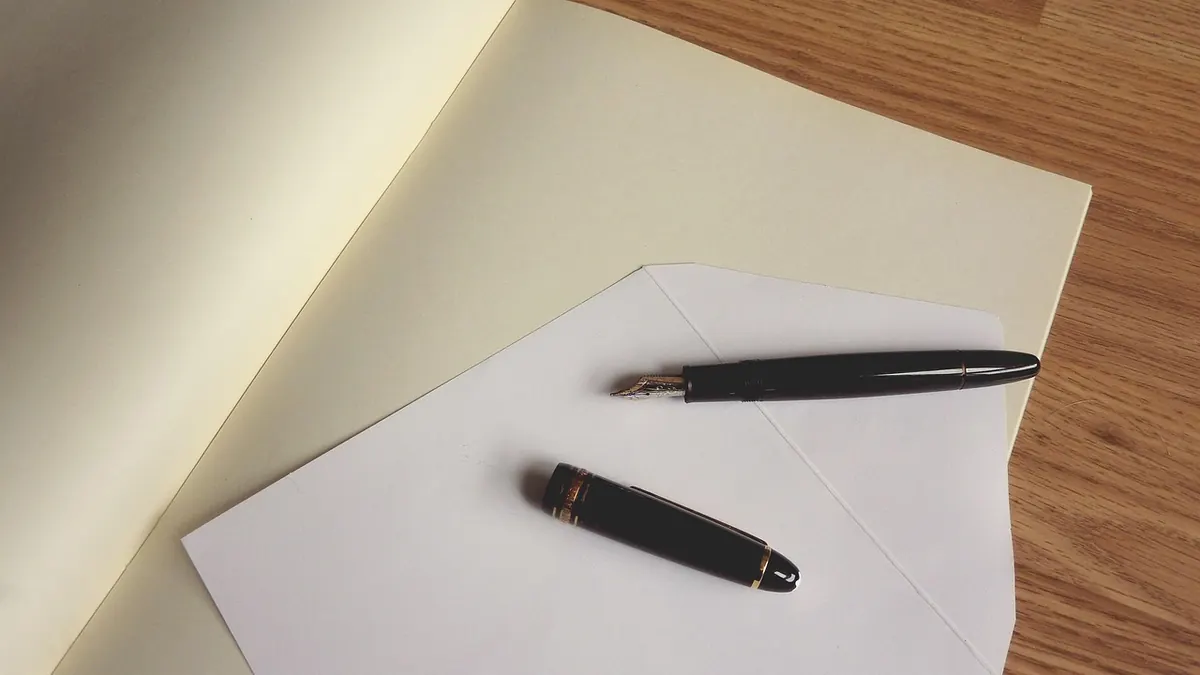
Photo: MAKY_OREL / Pixabay
Stow's outdoor market vanishes every November. Converting vacant retail space into a year-round vendor...
New to Stow football? Here is where to park, when the gates open, how seating works, and which concession...
A practical guide to Stow Youth Soccer registration: how birth-year age brackets work, what fees do and...