Why Stow Needs a Year-Round Indoor Public Market
Stow's outdoor market vanishes every November. Converting vacant retail space into a year-round vendor...

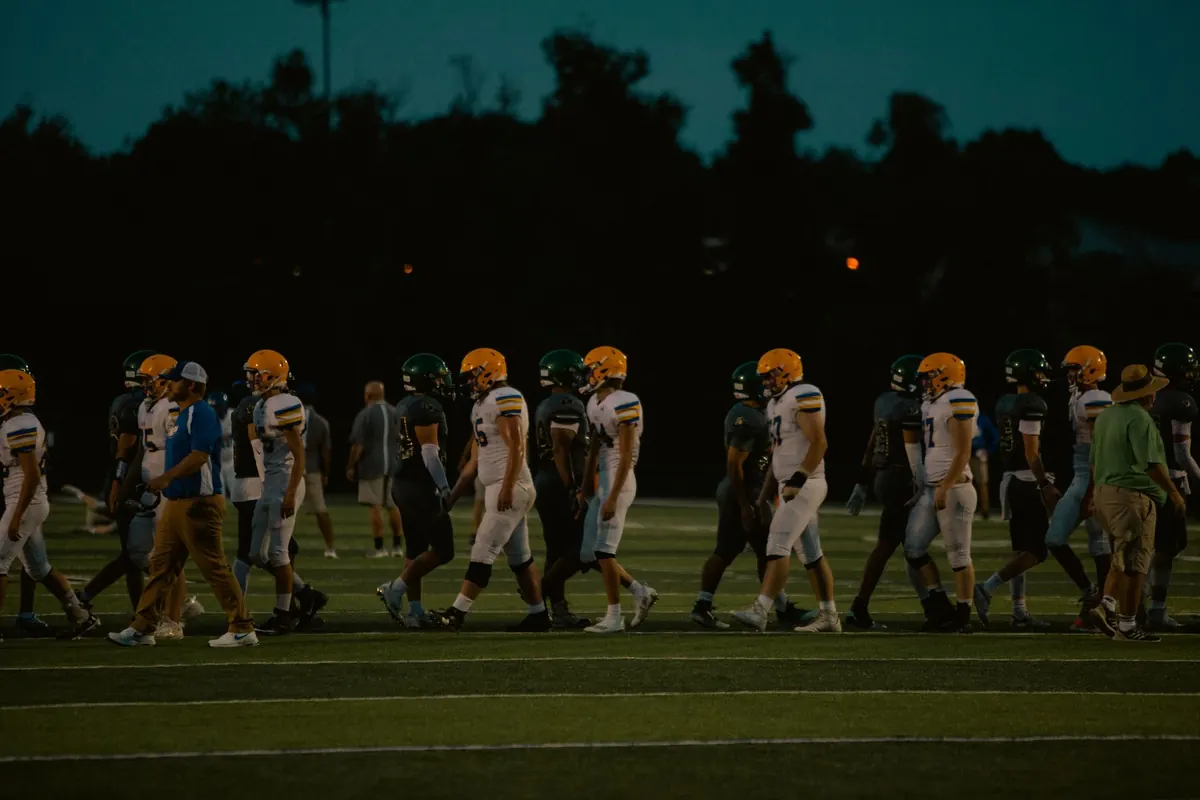
Friday night in Stow has a sound. It starts as a low hum in the parking lot — car doors, cooler lids, someone's radio — and builds into the crack of pads, the brass section warming up, and the announcer testing the microphone. By the time the lights come on, the whole place has its own weather.
If you have never been to a Stow football game, the first trip can feel like walking into someone else's family reunion. Everyone else knows where to park, when to stand, and which line to join at the concession stand. Here is what you need to know before kickoff.
The stadium lots fill early, and they fill fastest on rivalry nights, homecoming, and senior night. If you pull in twenty minutes before kickoff, you will spend that twenty minutes circling. Arrive forty-five minutes early and you will park without drama, walk a shorter distance, and still catch the pregame warmups.
Overflow parking usually spills onto nearby streets and into lots at neighboring businesses that allow it. Two things to remember: read the signs, and never block a driveway. Residents put up with a lot of traffic on Fridays, and the quickest way to sour a neighborhood on game night is to leave a car across someone's apron.
Leaving is its own event. The lot drains in one slow surge, so either slip out just before the final whistle or take your time — chat with the people next to you, let the band finish, and let the first wave clear. Rushing gains you almost nothing and costs you a lot of brake lights.
Gates generally open about an hour before kickoff, though that can shift for varsity games with pregame ceremonies. Check the district's athletics page or the school office for the current season's times rather than trusting what you remember from a few years back.
Tickets are sold at the gate and, increasingly, online in advance. Prices reset every season, so confirm the current rate before you go. Most programs offer a reduced rate for students and seniors, and some sell family passes or season passes that pay for themselves after a handful of games. If you are paying cash, small bills move the line faster; if you are paying by card, expect a reader at the gate but not always at every entrance.
Layers, first and always. September games are warm and humid; October games start pleasant and end cold. A blanket for your legs and a stadium seat with a back will make the fourth quarter far more enjoyable than bleacher metal will. Check the district's bag policy before you pack — many stadiums restrict larger bags and outside food and drink, and some enforce clear-bag rules. A small bag, a phone battery, and a hoodie cover most nights.
Most stadiums split the bleachers into a home side and a visitor side, and the home side is where the band, the student section, and the loudest regulars sit. You are welcome on either side, but sitting in the middle of the student section on your first visit is like standing in the front row of a concert when you only know one song.
A few unwritten rules keep everyone happy:
Also worth knowing: if lightning appears, most schools clear the stands and hold play until the area has been clear for a set period. That can mean a long wait in your car, so keep an eye on the sky and don't leave your keys in the car if you're parked far away.
The concession stand at a high school game is run by a booster club, which means the money goes back into uniforms, equipment, and travel. That alone is a reason to buy something. The other reason is that the lineup is reliably good in the way only volunteer-run food can be.
Ask a regular and you will hear the same short list:
Go early or go at halftime. The third quarter is the shortest line and the longest wait for anything cooked to order.
Pregame sets the tone: the band takes the field, the anthem is sung, and seniors are recognized on their night with their families. Kickoff follows. The first quarter is loud, the second is when the crowd settles in, and halftime belongs to the marching band — which, for a lot of people in the stands, is the main event.
The fourth quarter is different. The student section gets louder, the band plays more, and strangers start talking to each other about the play calling. Win or lose, the band plays the alma mater afterward and the players walk to the fence to meet their families. Stay for that part. It is the reason people keep showing up.
That is the whole routine. It takes one Friday to learn and about ten years to perfect, which is roughly how long the people around you have been doing it. Say hello to whoever is next to you — at a Stow football game, they are almost certainly a neighbor.
Photo: Yura Forrat / Pexels
Stow's outdoor market vanishes every November. Converting vacant retail space into a year-round vendor...
Most letters to the editor fail for fixable reasons: they're too long, too vague, or too late. Here's what...
A practical guide to Stow Youth Soccer registration: how birth-year age brackets work, what fees do and...